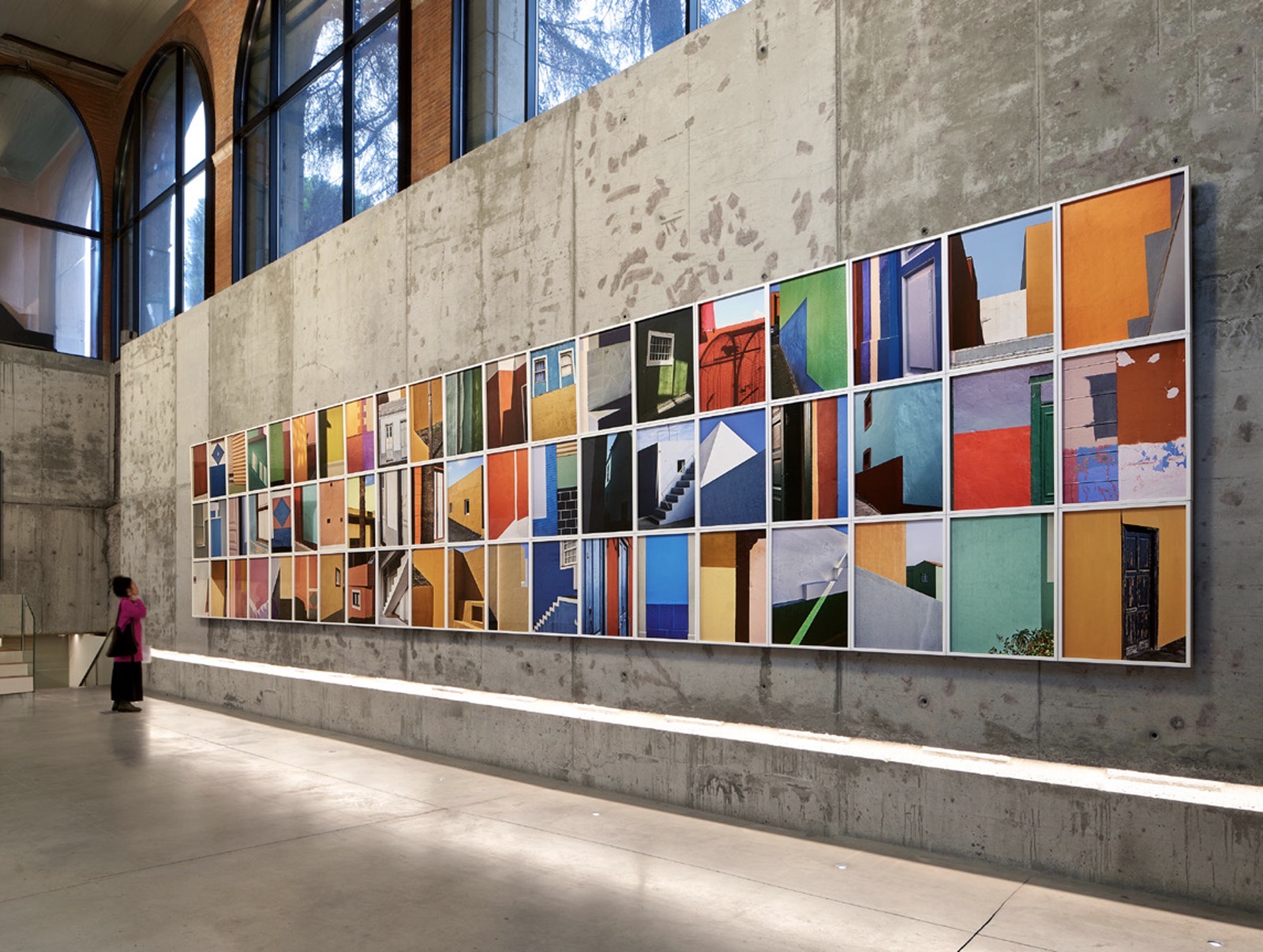
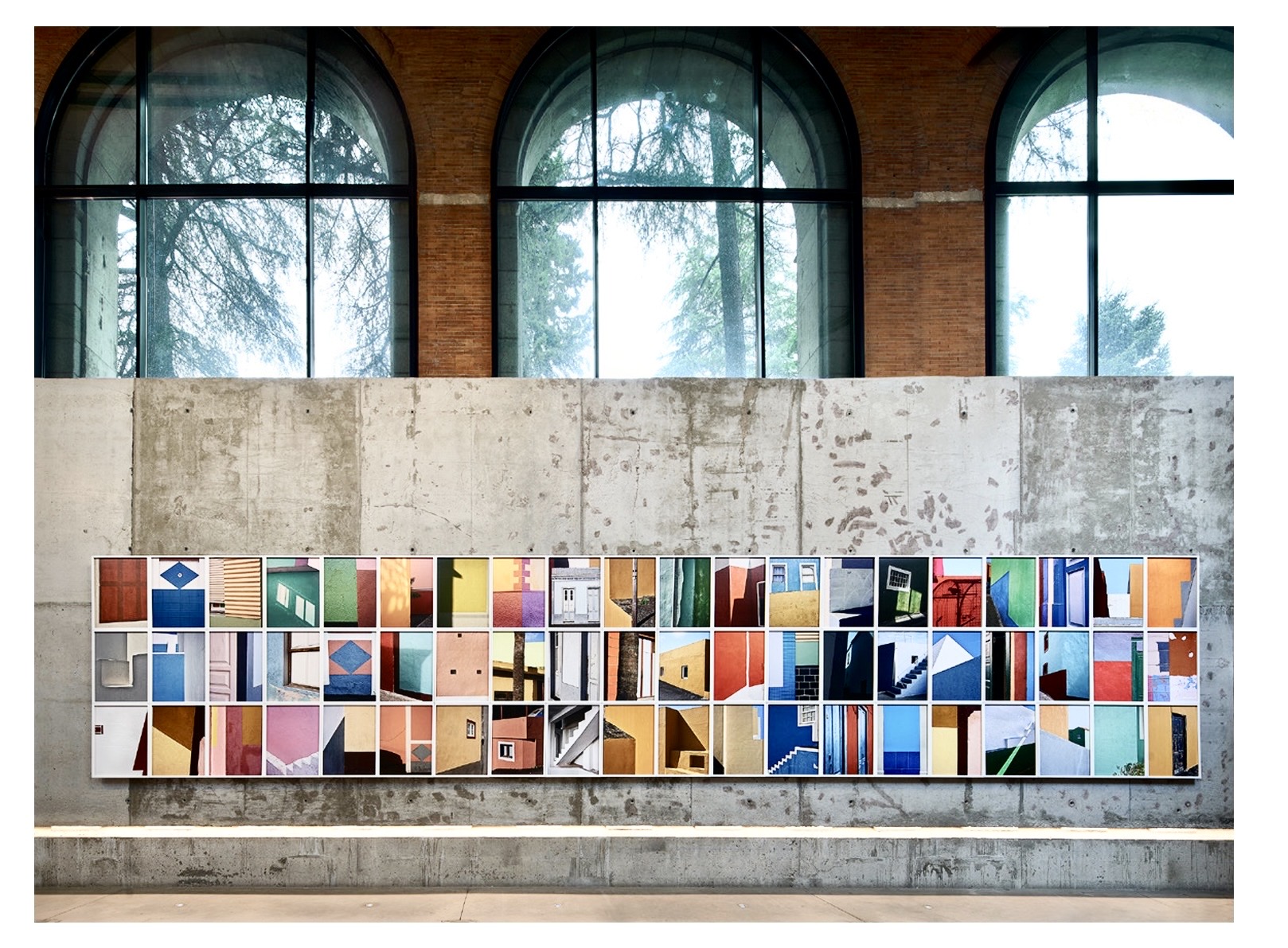
The Code of Forms is an installation conceived for the Lecture Hall at Casa de la Arquitectura as part of the institution’s commitment to analysing architecture through contemporary photography. It is the result of lengthy observation, and above all of profound admiration for the nature, people and vernacular architecture of the island of La Palma.
The work comprises a series of photographs of fragments of traditional houses which seeks to interpret their hidden language, if one in fact exists. Photography is a particularly effective knowledge tool for establishing this, althoughhere it is not so much a matter of thinking about the space; rather, it is the photographed space itself which thinks, or in other words prepares us for its interpretation.
With some examples the houses are located next to other similar but not identical ones: they are often old, traditional models in varying states of preservation; in many cases, newly constructed buildings have adopted these designs, replicating the original aesthetic models in their own way. In contrast, other houses are isolated and seemingly disconnected from each other, splashing the island’s vertical landscape with their colours.
Surrounded by the endless elements that clutter the everyday environment — posts, cables, signs, antennas, cars, clothes lines, etc., —these buildings provide a good example of the practical use of beauty, giving shape and meaning to the chaos of contemporary life. Their walls are meticulously painted and repainted in bright colours with geometric ornamental patterns. Over the years, each layer of paint is the sediment of a story in the lives of their inhabitants.
Like a code of allegorical forms, this work attempts to decipher a visual repertoire: could this architectural typology represent a premeditated sense of identity? Or is it the sum of identificatory units that generates the idea of a collective character? What is clear is that these traditional dwellings are an extremely important part of La Palma’s history, a world that may disappear and which has in fact already done soin many cases. In that sense, this installation could be interpreted as a theatre of memory for the island’s vernacular architecture.